Before the towns: an island of forest
Long before there were quintas, vineyards or hotels, Madeira was a mountainous island covered in forest. Its Portuguese name means “wood”, a reminder of the landscape encountered by the early settlers.
Settlement changed that landscape. Forest was cleared for crops and homes, while steep ground was turned into cultivated terraces. Yet parts of the island’s native laurel forest survived. The contrast between wooded valleys and carefully worked farmland is one of the most revealing things to notice as you travel inland.
Madeira’s Laurissilva was added to UNESCO’s World Heritage List in 1999. It preserves a surviving example of a laurel-forest type once much more widespread.
The lush scenery is therefore not all the same kind of history. Native forest, agricultural terraces and ornamental estate gardens belong to different chapters. A walk through woodland and a visit to a country-house garden can show you very different Madeiras.
Portuguese arrival and the first settlements
Portuguese navigators reached Porto Santo and Madeira in the early fifteenth century. Organised settlement followed in the 1420s. João Gonçalves Zarco, Tristão Vaz Teixeira and Bartolomeu Perestrelo were central to that settlement story. The islands already appeared on fourteenth-century maps, before the Portuguese settlement programme.
Zarco, Teixeira and Perestrelo helped lead the early Portuguese settlement and later received captaincies in Funchal, Machico and Porto Santo. These later grants should not be confused with the first arrivals: Teixeira’s Machico grant dates to 1440 and Perestrelo’s Porto Santo grant to 1446. The captains held authority over settlement and land. Settlers came from mainland Portugal, including the Algarve and the north, bringing agricultural skills and the customs from which Madeiran society developed.
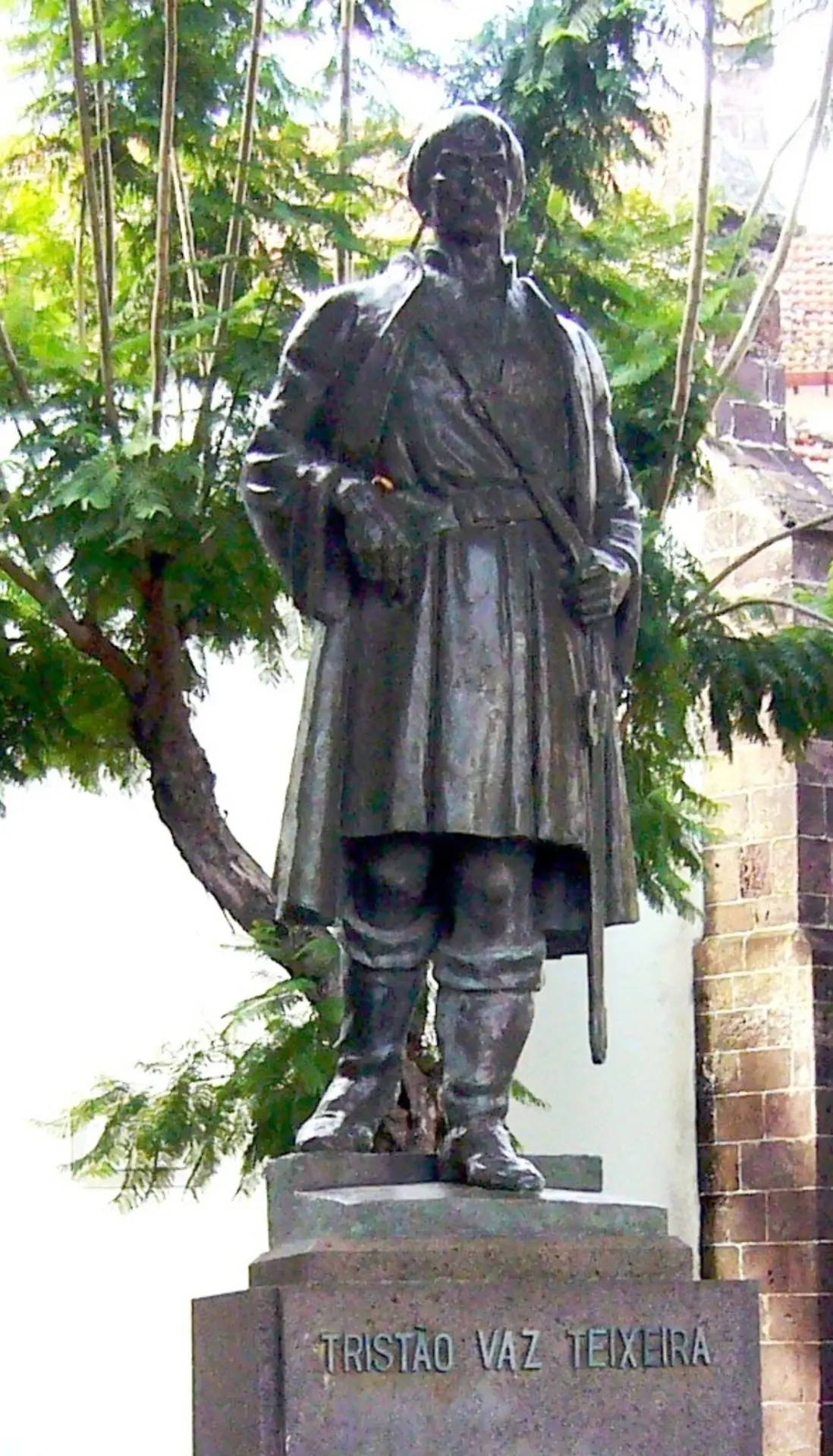
Machico is a good place to connect the early story with a visit: the sheltered bay and the Tristão Vaz Teixeira statue give the history a setting. Funchal tells the story of the settlement that grew into the island’s principal port and city. For the lives of Zarco, Teixeira and Perestrelo, continue to our historic families guide.
Sugar: the island’s white gold, and its human cost
The famous families are one part of that story, but not the whole of it. Farmers, levada builders, enslaved people, merchants, emigrants and hotel workers also helped make the Madeira visitors encounter today.
During the fifteenth and sixteenth centuries, sugar helped turn Madeira into an important Atlantic trading centre. Cane needed land, water, labour and processing, while the finished sugar needed buyers and ships. Its production connected the island with markets far beyond Portugal.
Portuguese, Flemish and Italian commercial interests helped develop this economy. João Esmeraldo, a Flemish merchant, became one of its prominent figures. The Genoese Lomelino family is another example of merchants whose lives and property became part of the island’s history. Madeira was Portuguese, but its trading connections brought people, capital and ideas from several countries.
That prosperity had a human cost. Enslaved Africans and enslaved people brought from the Canary Islands worked within the sugar economy, alongside other agricultural workers. Madeira’s grand houses and valuable imports cannot be understood only as the achievements of wealthy merchants. The labour of people who had little or no freedom belongs in the story too. Cristiana Bastos’s University of Lisbon study connects Madeira’s sugar production with Flemish and Genoese markets and enslaved labour from Africa and the Canary Islands.
In Funchal, Museu A Cidade do Açúcar displays archaeological material recovered from the site of Esmeraldo’s former houses. The Sacred Art Museum’s Flemish paintings and sculpture reveal another legacy of the trading links and wealth of the sugar period. At Quinta das Cruzes, the later history of the estate includes the Lomelino family. These places make the sugar story more tangible than dates alone. The Sacred Art Museum’s account of its Flemish collection explains the connection between imported art, Flanders and the sugar trade.
Churches, imported art and a fortified waterfront
Funchal Cathedral brings early Madeira into focus through its Gothic and Manueline architecture and intricate Mudéjar-style wooden ceiling. Funchal became a diocese in 1514 and was elevated to an archdiocese in 1533. Its extensive overseas religious jurisdiction connected this small Atlantic city with the churches of Portugal’s maritime expansion.
The busy port also faced danger. In 1566, French corsairs attacked and plundered Funchal, exposing weaknesses in its defences. The fortifications that followed belong to a longer programme of protecting the city. Construction of São Tiago Fortress began in 1614.
At the Old Town waterfront, the fortress’s position makes the defensive story easy to imagine. Together, the cathedral, imported religious art and coastal defences show a city linked to international trade, faith and conflict, rather than a remote village cut off from the world.
Why Madeira has levadas
The levadas began as water channels for agriculture. Madeira’s steep relief and uneven distribution of rainfall made irrigation a central problem for agriculture. Channels carried water from available sources to cultivated land, helping farmers work ground that would otherwise have been much harder to use.
Their construction developed over centuries, beginning in the early settlement period. Builders followed the contours of mountainsides, cut through difficult terrain and created access paths so the channels could be inspected and maintained. The water supported crops and mills; later systems also served drinking-water supplies and electricity generation.
Major twentieth-century works expanded the network and integrated irrigation with hydroelectric generation. The levadas you see today bring together centuries of construction and later engineering. The IFCN’s bilingual history of the levadas describes their continuing roles in irrigation, water supply, mills and electricity.
On a levada walk, the channel beside you is working infrastructure as well as part of the scenery. Its gentle slope, tunnels, access paths and branches into farmland all have practical purposes. You are walking through one of the island’s most enduring relationships between people and landscape. Check current trail conditions before choosing a route.
Wine and an island connected to the Atlantic
As sugar’s dominance faded, wine became increasingly important to Madeira’s economy. Cultivation, trade and local livelihoods changed over generations as wine gained importance alongside other crops. Sugar production did not disappear: in the nineteenth century, the Hinton family’s steam-powered mill in Funchal carried it into the industrial era. Its surviving chimney at Santa Luzia Gardens gives visitors a visible link to that later chapter.
Madeira wine travelled by sea and became known far beyond the island. British merchants established on Madeira from the seventeenth century helped develop its overseas markets. The names still seen on bottles record different people and partnerships: Cossart Gordon brings together Scottish and Irish connections, while the Blandys built a wine and shipping business after John Blandy’s arrival in 1808.
The trade also faced severe setbacks. Powdery mildew in the 1850s and phylloxera later in the nineteenth century damaged vineyards and livelihoods. The wine story includes agricultural hardship and recovery, not only famous labels and prosperous merchants.
These merchants were not simply passing visitors. Some established homes, families and businesses on the island. Their story helps explain why Madeira has both a deeply Portuguese identity and a visible British commercial and cultural presence.
A visit to a Funchal wine lodge connects that history with something you can taste. The buildings, ageing casks and family collections are part of the experience, not merely a backdrop to a glass of wine. Our Madeira wine guide covers styles and places to try them; our Blandy and Cossart Gordon biographies explain the people behind the names.
Funchal’s harbour and the wider Atlantic
Madeira’s position brought opportunity, but also exposure to wider conflicts. Its port mattered to traders and naval powers alike. During the Napoleonic period, British forces occupied the island in 1801–1802 and again from late 1807 until 1814. The political arrangements changed during the second occupation, with Portuguese sovereignty restored while British troops remained.
Merchants, military forces and winter residents were different parts of this international history, arriving for different reasons.
Winter visitors, health travel and the rise of hotels
Madeira attracted visitors long before it had an airport. In the nineteenth century, wealthy British and other European travellers came by sea, often staying through the winter. Some sought relief from pulmonary illnesses in the mild climate. Doctors of the period recommended such stays, making health travel an important part of the island’s early tourism.
Many stayed in rented quintas rather than modern resort hotels. Long visits created demand for accommodation, transport, gardens and services, drawing the island’s existing commercial community into a growing hospitality business.
William Reid, a Scot who arrived as a teenager in 1836, developed accommodation ventures before planning the cliffside hotel now known as Reid’s Palace. He died before its completion, and his sons carried the project forward to its opening in 1891. The surviving hotel is one of the most recognisable legacies of that early hospitality business.
The legacy is still visible in Funchal’s quintas, gardens and historic hotels. Palheiro’s history, for example, includes both the Carvalhal and Blandy families. A garden visit is not only about exotic plants: it can also reveal how land, wealth and international connections shaped an estate. For a visit to one of the island’s best-known historic hotels, see our Reid’s Palace bar guide.
Madeirans abroad: departures, new communities and returns
Madeira’s international history is not only about people arriving. Islanders also left to find livelihoods overseas, creating communities far from home. Their destinations and circumstances changed over time: migration to Brazil has roots reaching back to the sixteenth century, while British Guiana, now Guyana, and parts of the Caribbean became significant destinations in the nineteenth century.
Some of those journeys were connected with plantation labour recruitment. They belong to a history of economic pressure and difficult working conditions, not simply a romantic story of islanders seeking adventure. Later generations built communities in places including South Africa and Venezuela.
One especially memorable connection leads to Hawaiʻi. Madeiran migrants arriving on the Ravenscrag in 1879 included craftspeople associated with the development of the ʻukulele from Portuguese instruments. The ʻukulele is a Hawaiian instrument, but its story carries a Madeiran thread across another ocean.
Migration also runs in the other direction. Some Madeirans and their descendants have returned, including families from Venezuela. The island’s connections overseas are therefore not just museum history: they continue through family ties and the movement of people today.
When the First World War reached Funchal
On 3 December 1916, the German submarine U-38 torpedoed three ships anchored in Funchal harbour, then shelled the city. Cultura Madeira’s account of the 1916 attack includes contemporary photographs from the Madeira Photography Museum. On 12 December 1917, another German submarine, U-156, shelled Funchal. Mathias Saecker’s study in the regional archive’s journal reproduces part of U-156’s war diary, held by the German Federal Archives. The attacks brought the wider Atlantic conflict directly to the island; insecure shipping also made supplies more difficult during the war.
The calm waterfront visitors see today was therefore once part of a much more vulnerable port. Read the Funchal guide alongside this chapter to connect that history with the city and harbour.
Flights and modern Madeira
The airport opened on 8 July 1964, an important turning point in access to the island. Tourism already existed, but air travel changed how visitors could reach Madeira and helped make shorter holidays more practical. The runway’s major extension opened in September 2000, adding another striking piece of engineering to the island’s story.
Modern roads and tunnels also changed the experience of travelling through this steep landscape. The island seen on a day trip today is much easier to cross than the Madeira of long sea journeys and lengthy winter stays. Our transport guide and tunnel guide help connect that change with journeys you can make now.
Political change belongs in this chapter too. Following Portugal’s move to democracy, Madeira’s political-administrative autonomy was enshrined in the Constitution of 1976. Madeira is an autonomous region of Portugal, not an independent country. Its regional institutions are part of the modern island, alongside an economy in which tourism has a prominent place.
Cristiano Ronaldo was born in Funchal, and his football career brought Madeira to the attention of fans around the world. Madeira Airport took his name in 2017. On Funchal’s waterfront, the CR7 Museum displays trophies and memorabilia from his career.
Where to see Madeira’s history
Choose a chapter that interests you, rather than trying to cover everything in one day. Funchal brings together several of these stories; Machico and a levada walk take you further into the history of settlement and the landscape.
| Place | The history it brings to life | Visitor link |
|---|---|---|
| Machico bay and the Teixeira statue | Early Portuguese settlement and the eastern captaincy | Machico guide |
| Quinta das Cruzes and Porto Santo | The navigator and merchant families behind the island's famous names | Historic families guide |
| Museu A Cidade do Açúcar, Funchal | Sugar wealth, international merchants and finds from Esmeraldo’s houses | Funchal guide; museum information |
| Sacred Art Museum, Funchal | Flemish art and the trading connections of the sugar period | Museum collection and visitor information |
| Santa Luzia Gardens, Funchal | The surviving Hinton mill chimney and Madeira’s industrial sugar economy | Funchal guide |
| A Funchal wine lodge | Wine exports, merchant families and the continuing trade | Madeira wine guide |
| Madeira Photography Museum, Atelier Vicente’s | Ordinary Madeirans, changing streets, work and island life | Photography museum information |
| A levada walk | Irrigation, farming and generations of water engineering | Walks guide and current conditions |
Atelier Vicente’s is particularly useful if you want to see the people behind the landscape. Its photographic heritage brings workers, families and everyday island life into a story that can otherwise be dominated by wealthy names and famous visitors.