Zarco and the Câmaras: the founders of Funchal
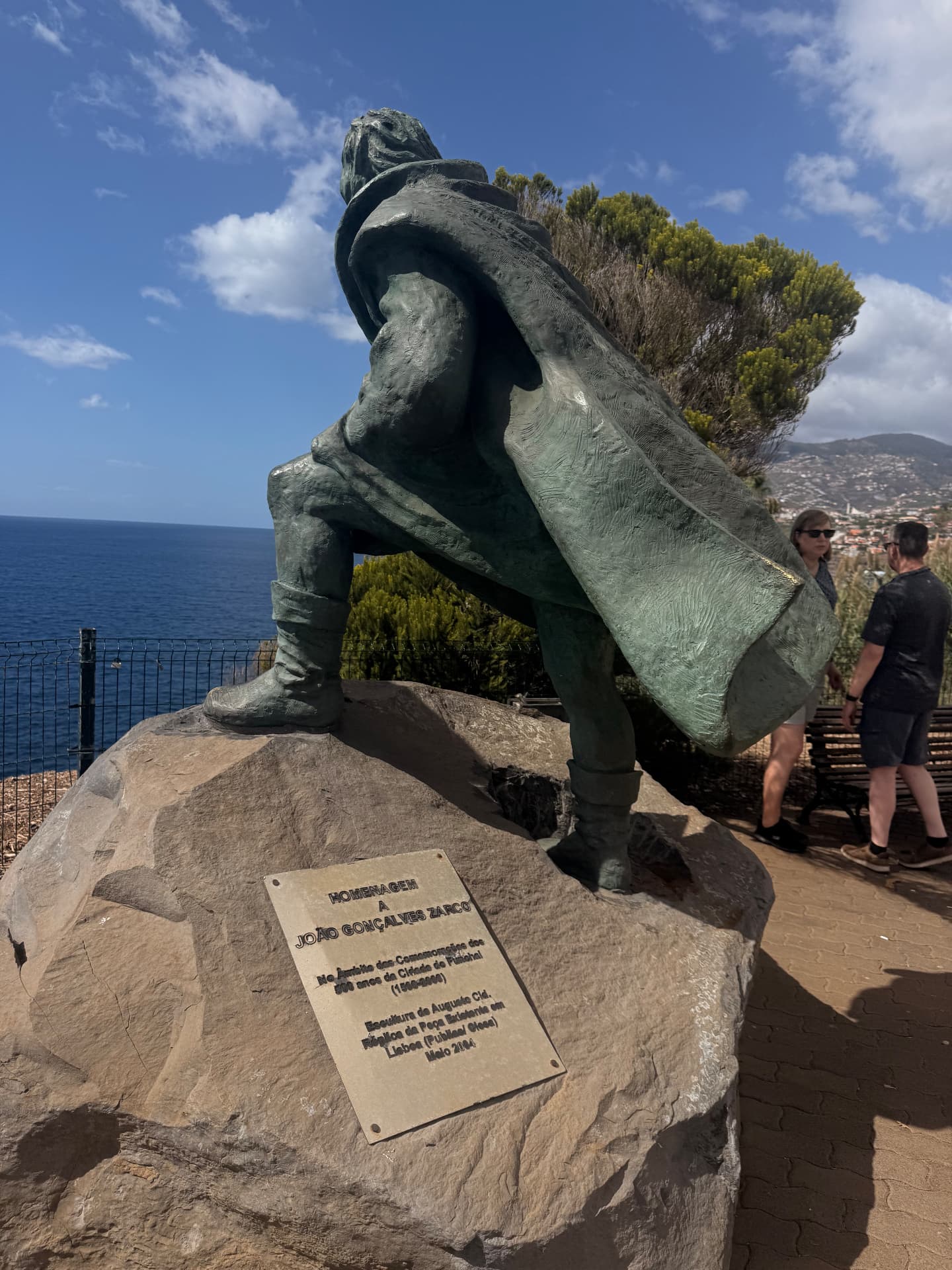
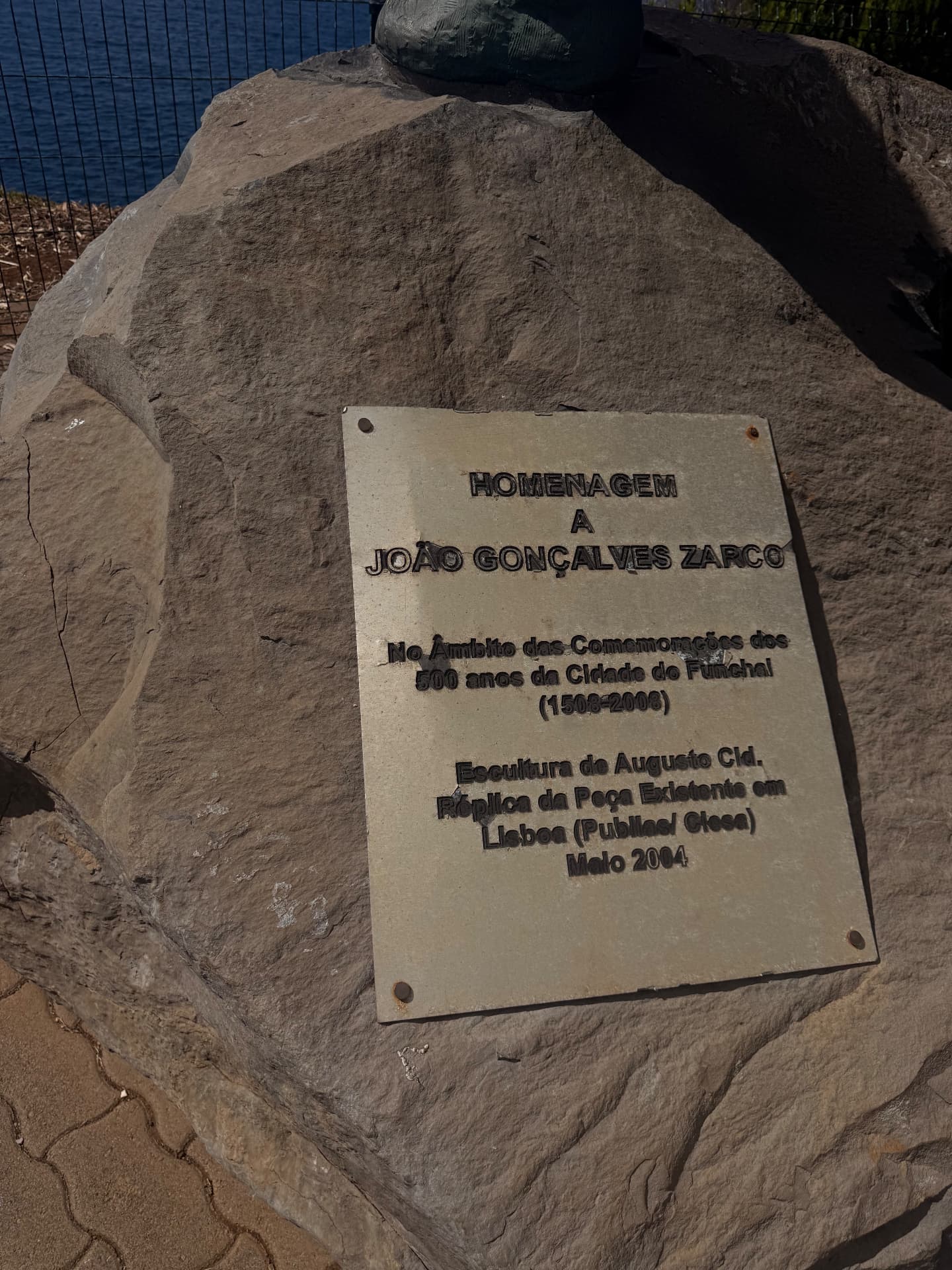
João Gonçalves Zarco is the name you will see most. A navigator for Prince Henry the Navigator, he helped lead Portuguese arrival at Madeira in the early fifteenth century and later received the captaincy of Funchal, the southern and western half of the island. His descendants took the surname Câmara, after Câmara de Lobos, the bay where the explorers found monk seals (lobos-marinhos). For generations the Gonçalves da Câmara family governed Funchal.
Where to find him today: Francisco Franco's statue of Zarco on Avenida Arriaga in central Funchal, and in the very name of Câmara de Lobos.
Zarco was more than a navigator: as captain of Funchal, he was responsible for settlement and administration. A captaincy was a territory granted by the Crown, not a modern town council. In 1460, King Afonso V granted him arms and the name Câmara de Lobos, giving the family a documented link to the name that still appears across Madeira.
Quinta das Cruzes is identified by its museum as Zarco's last residence. His son João Gonçalves da Câmara enlarged the house, although the mansion visitors see today also reflects later rebuilding. The property remained with the Câmara family until the seventeenth century.
The story includes women whose work is easily overlooked. João Gonçalves da Câmara and Maria de Noronha founded Santa Clara Convent. Their daughter Constança de Noronha supervised building work, while her sister Isabel became its first abbess. The quinta and convent reveal a family legacy far richer than the familiar statue on Avenida Arriaga.
Sources: Universidade NOVA, Quinta das Cruzes Museum and Santa Clara Convent.
Tristão Vaz Teixeira: the captain of Machico
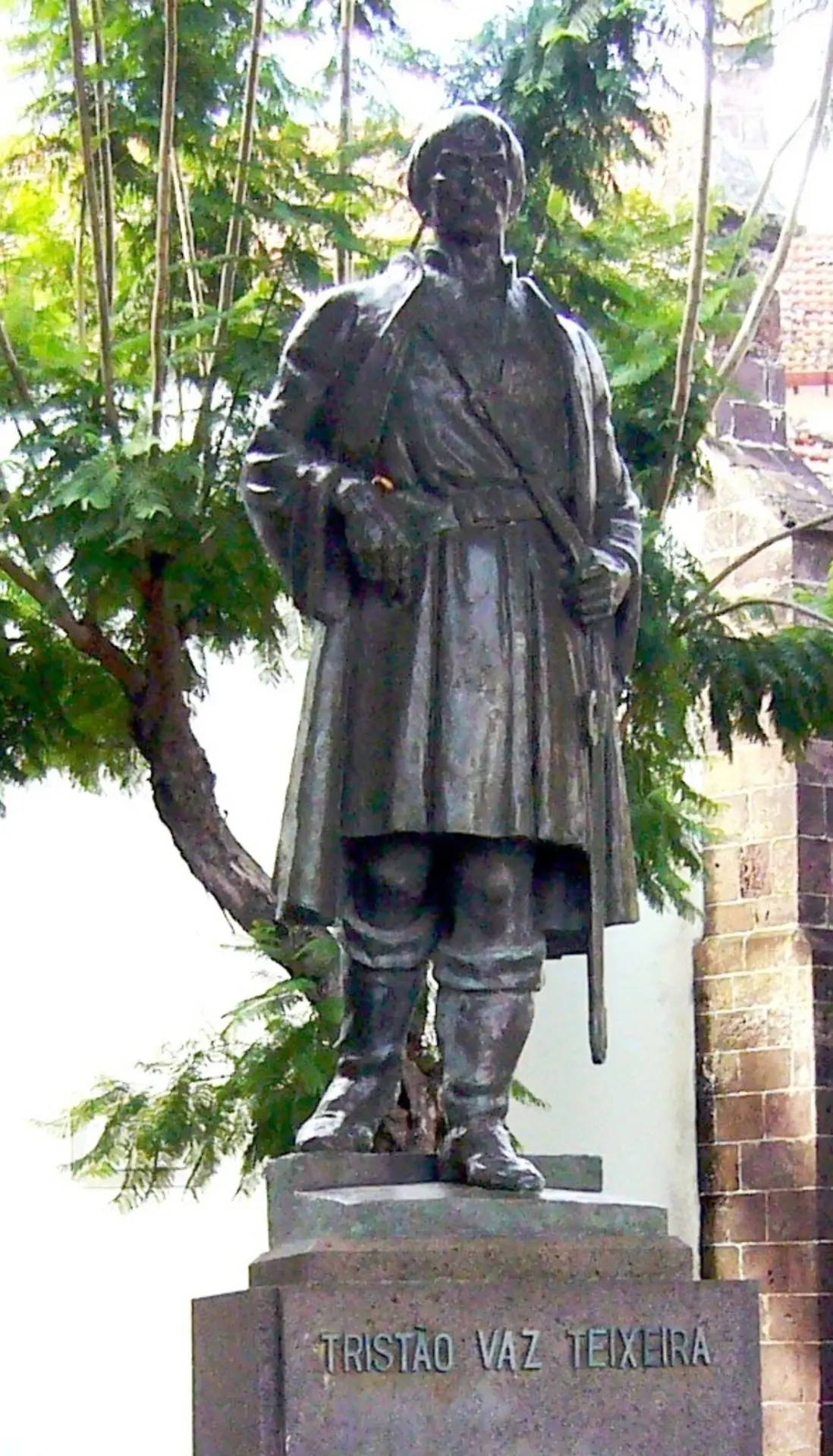
Zarco's fellow navigator Tristão Vaz Teixeira received the captaincy based at Machico, on Madeira's east coast. Machico was one of Madeira's first settlements and is still proud of it. Visit Machico and its bay to see why the first settlers chose it.
Tristão Vaz was an esquire in Prince Henry the Navigator's household. He received the hereditary captaincy of Machico in May 1440, following his involvement in reconnaissance and settlement. His task was to organise a territory much larger than today's municipality.
Machico's municipal history describes the captaincy running from Ponta da Oliveira in Caniço, east to Ponta de São Lourenço and around the northern coast to Ponta do Tristão in Porto Moniz. That makes Machico's story part of the history of northern Madeira too. The succession included Tristão Teixeira das Damas and later members of the Teixeira family.
Where to find him today: the bronze statue outside Machico's parish church was made by Anjos Teixeira and inaugurated in 1972. It is a modern memorial, not a portrait made during the captain's lifetime.
Sources: Universidade NOVA, Machico municipal history and Tristão Vaz Teixeira statue.
The Perestrelos, Porto Santo and Christopher Columbus
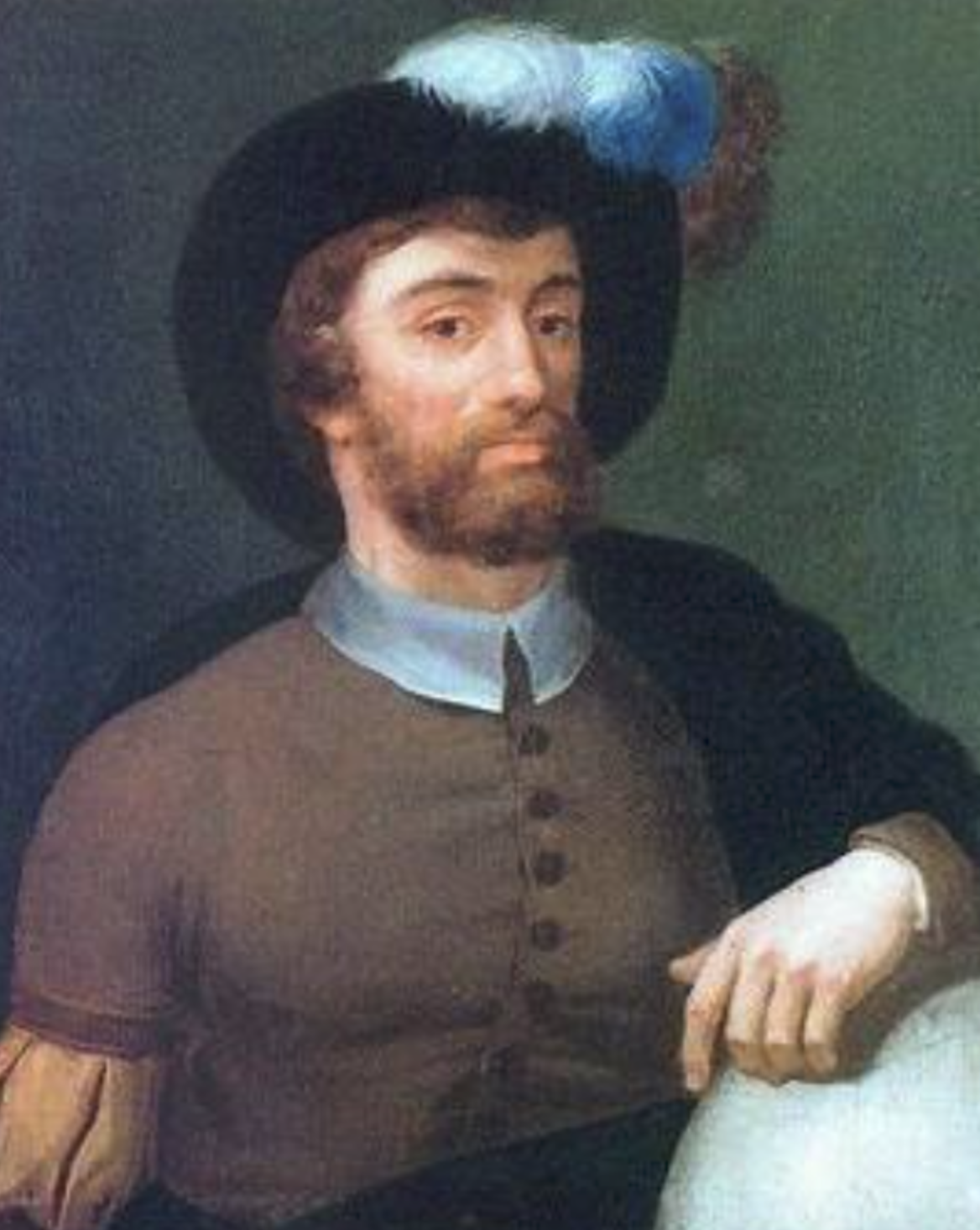
Bartolomeu Perestrelo, the third navigator, became captain of Porto Santo. His daughter, Filipa Moniz Perestrelo, married Christopher Columbus, who lived on Porto Santo for a time before his great voyages. Casa Colombo in Vila Baleira tells that story.
Of Italian ancestry, Bartolomeu Perestrelo was responsible for settlement and government on Porto Santo. Prince Henry's letter granting him the captaincy dates to 1 November 1446. His significance is not just his later connection to Columbus: he helped organise the island community itself.
Filipa Moniz Perestrelo was the daughter of Bartolomeu and Isabel Moniz. She lived at the Monastery of Santos in Lisbon before marrying the Genoese navigator Christopher Columbus. The museum's history places the wedding in Lisbon in 1479 or 1480, although the exact date is debated. Filipa deserves her own place in the story as the family connection between Porto Santo's captains and Columbus, rather than a passing name in a family tree.
Columbus's experience in Portugal and on Atlantic routes preceded his voyages to the Americas. Porto Santo belongs to that background, but the association of today's Casa Colombo with his residence rests on oral tradition. Opened in 1989, the museum explores the history of the islands and Columbus's time in Porto Santo.
Sources: Casa Colombo, Porto Santo Museum and Universidade NOVA, captaincy grant.
Esmeraldo and white gold: the sugar years
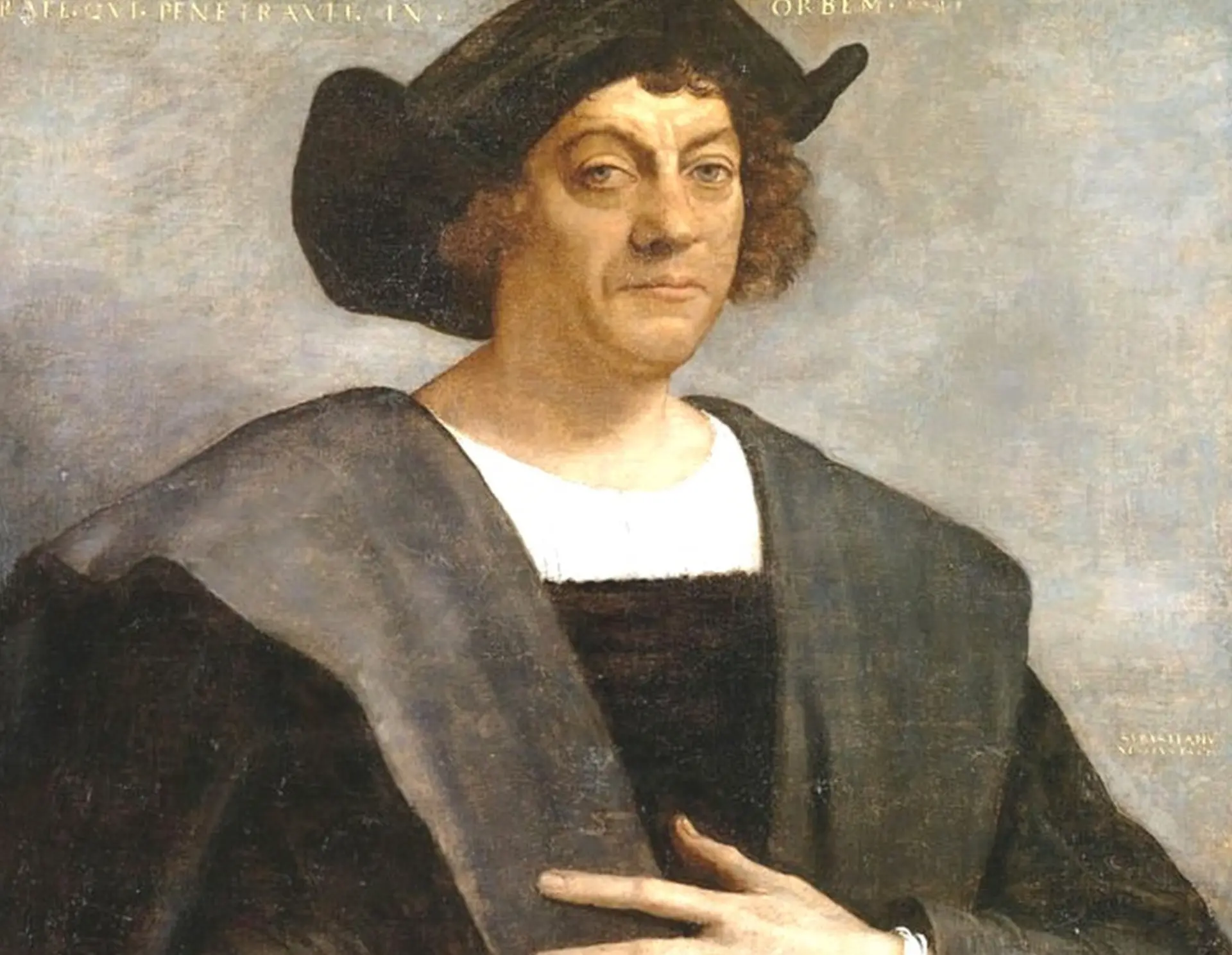
Before wine, Madeira's wealth was sugar. João Esmeraldo, a merchant of Flemish origin, was one of the great names of that trade, with land at Lombada da Ponta do Sol. Tradition says Columbus stayed at Esmeraldo's house in Funchal in 1498; the house is gone, but Rua do Esmeraldo keeps the name.
Also recorded as João de Esmenaut, Esmeraldo belonged to the merchant network linking Madeira with Flemish markets. Sugar was shipped especially to Bruges and later Antwerp. Madeira was not simply a trading stop: plantations, mills and levadas supported an export economy that transformed Funchal.
At Lombada dos Esmeraldos above Ponta do Sol, the family name survives in the house and former agricultural estate. The surviving building includes sixteenth-century work and eighteenth-century additions. In 1522, the property was divided into the Santo Espírito and Vale da Bica entails, associated with his sons Cristóvão and João. An entail, or morgadio, kept a group of properties tied to family succession.
Where to find this history: Funchal's Museu A Cidade do Açúcar displays objects found in the 1989 excavations of Esmeraldo's houses, demolished in 1876. They reveal everyday life as well as merchant wealth. Madeira's sugar economy also depended on enslaved labour, a part of the story that should not disappear behind grand houses.
The Carvalhal connection comes later through inherited property. João José Xavier de Carvalhal Esmeraldo (1778–1837), the first Count of Carvalhal, administered the Santo Espírito entail. He was not the early merchant João Esmeraldo. Palácio de São Pedro, now Funchal's Natural History Museum, and the history of Palheiro help trace this nineteenth-century chapter.
Sources: Museu A Cidade do Açúcar, Willy Van Ryckeghem, The Low Countries and Funchal Natural History Museum.
Blandy: wine, shipping and Palheiro
John Blandy arrived in Madeira in 1808 and founded his wine and trading business in 1811. The family grew into shipping and other trades, bought Quinta do Palheiro in 1885 and owned Reid's for decades. According to the company history, they are the only founding family of the Madeira wine trade still running their own wine company.
Where to find them today: Blandy's Wine Lodge on Avenida Arriaga (see our Madeira wine guide) and the Palheiro Gardens, east of Funchal.
The Blandy business extended well beyond the cellar. The family worked in shipping agencies, coal and water provisioning and coastal steamship services. In an Atlantic port, those activities connected Madeira with commercial routes and the travellers arriving by sea.
In 1885, John Burden Blandy bought Quinta do Palheiro from the second Count of Carvalhal. Its gardens already existed, with trees and camellias introduced by the Carvalhal family. The Blandys developed an established estate; they did not create the gardens from nothing.
The family also entered the hotel business. Reid's passed to Blandy-owned Island Hotels in 1937 and remained under that ownership until 1996. Reid and Blandy are connected through business ownership, not because William Reid was a member of the Blandy family.
At Blandy's Wine Lodge, ageing barrels, the historic wine collection and the family museum make the continuity of the business tangible. Palheiro Gardens reveal a different chapter: an aristocratic country estate developed by a merchant family.
Sources: Blandy Group history, Madeira Wine Company and Palheiro Gardens.
Cossart Gordon: the oldest wine house
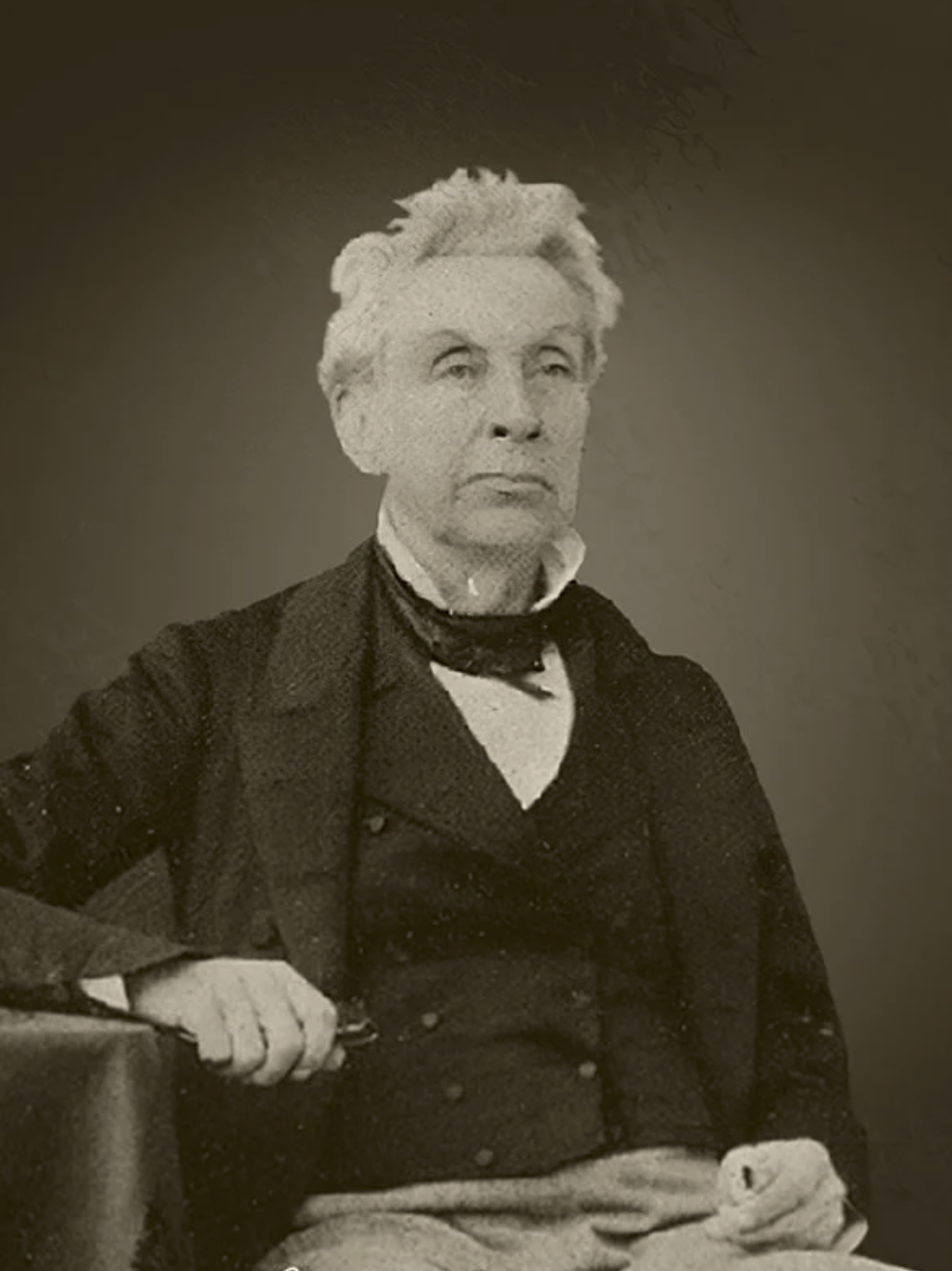
Founded in 1745 by the Scot Francis Newton, it is the oldest company in the Madeira wine trade. Thomas Gordon, also Scottish, joined in 1758 and William Cossart, an Irishman, in 1808, giving the name still on the labels. The house grew through Atlantic trade. Today the brand belongs to the Madeira Wine Company, alongside Blandy's.
Cossart Gordon is not the name of one founding family. It records successive partnerships: Francis Newton began the business in 1745, Thomas Gordon, a Scot from Balmaghie, joined in 1758 and Thomas Murdoch in 1791. William Cossart, an Irishman of French Huguenot descent, joined in 1808.
Francis Newton's brother Andrew, based in Virginia, helped the company develop trade with North America, connecting Madeira's wine producers with customers across the Atlantic.
The contribution was cultural too. Noël Cossart, born on Madeira in 1907 and a former senior partner, wrote Madeira: The Island Vineyard. Today Cossart Gordon is a Madeira Wine Company brand, not a claim that the Cossart family still controls the business.
The Leacocks are a separate wine-family story, not a branch of the Cossarts. John Leacock arrived in 1741 as a teenager and learnt the trade on the island. Quinta da Casa Branca in Funchal includes the Leacock family in its agricultural history. For wines from these historic houses, see our Madeira wine guide.
Sources: Cossart Gordon history, Madeira Wine Company brands and Quinta da Casa Branca history.
William Reid: the Scot behind Madeira's grand hotel
William Reid was born near Kilmarnock, Scotland, in 1822 and arrived in Madeira aged 14 in 1836. He started in a bakery, moved into the wine trade and then into letting quintas to British families who wintered on the island for their health. He planned a grand hotel on the cliffs west of Funchal but died before it opened. His sons opened Reid's in November 1891. He was not a Blandy: the Blandy family only bought the hotel in the 1930s, and today it belongs to Belmond.
Before the Palace, William Reid and his wife Margaret Dewey developed other accommodation businesses. Quinta das Fontes became the Royal Edinburgh Hotel, and their ventures included Funchal hotels and accommodation in Monte and Santana. Reid helped turn lengthy winter stays into an organised hospitality business.
The future hotel site was known as Salto do Cavalo. Building began in 1887, and soil was brought in for its cliffside gardens. William died in 1888; his sons William, known as Willy, and Alfred managed the opening on 1 November 1891.
The ownership story has several chapters. The Reid family sold its interest in 1925; Blandy ownership followed in 1937. Orient-Express acquired the hotel in 1996, and Reid's is now part of Belmond. The founder, his sons and later owners played different roles.
Where to find the legacy: the hotel and gardens west of central Funchal. The William restaurant commemorates the founder by name. See our Reid's Palace bar guide for a visit to the bar at this historic hotel.
Sources: British Historical Society of Portugal and Belmond Reid's Palace history.
The Hintons: sugar and Camacha's 1875 football match
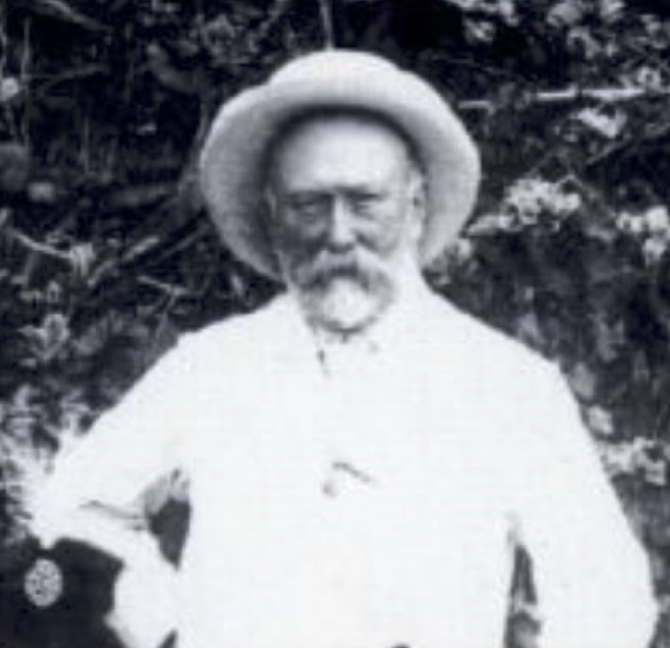
William Hinton settled in Madeira in 1838 and the family became one of the big names in sugar, with the Hinton steam mill in Funchal. His son Harry Hinton is associated with the memory of the 1875 football game in Camacha, marked by a monument at Largo da Achada.
William Hinton (1817–1904) arrived in Madeira in 1838. The family's story connects sugar production with activities including bananas and wickerwork. The Hinton mill, also called the Torreão factory, became a landmark of Funchal's steam-powered sugar industry.
His son Henry Calverley Hinton, usually known as Harry, was born in Funchal in 1857. He continued and diversified the businesses into wine, spirits, automobiles and tobacco. His sporting involvement went beyond the 1875 story: he supported Madeiran clubs and was associated with the Hinton Cup in the 1920s.
Camacha commemorates a game in 1875 traditionally described as Portugal's first football match, associated with Harry Hinton. The account of a ball brought from England rests on oral tradition. The monument at Largo da Achada records that local memory, rather than documenting every detail of the match.
Where to find the legacy: Camacha and Santa Luzia Gardens in Funchal. The old mill chimney and some machinery survive in this garden on Rua 31 de Janeiro, not in Santa Catarina Park.
Sources: Cultura Madeira, Hinton family, Camacha parish council and Santa Luzia Gardens.
Frequently asked
Who was Zarco in Madeira?
João Gonçalves Zarco was the Portuguese navigator who, with Tristão Vaz Teixeira and Bartolomeu Perestrelo, helped lead Portuguese arrival at Porto Santo and Madeira in the early fifteenth century for Prince Henry the Navigator. Organised settlement followed in the 1420s. He became captain of the Funchal half of the island, and his descendants took the surname Câmara, after Câmara de Lobos. His statue by Francisco Franco stands on Avenida Arriaga in Funchal.
Who are the Blandy family of Madeira?
The Blandys are a British family on Madeira since John Blandy arrived in 1808 and founded his business in 1811. They built a wine and shipping business, bought Quinta do Palheiro in 1885 and owned Reid's hotel for decades from the 1930s. According to the company history, they are the only founding family of the Madeira wine trade still running their own wine company, and Blandy's Wine Lodge in Funchal is open to visitors.
Was William Reid part of the Blandy family?
No. William Reid was a Scot, born near Kilmarnock in 1822, who arrived in Madeira aged 14 in 1836. He worked in the wine trade and letting quintas to winter visitors, and planned Reid's hotel, which his sons opened in 1891 after his death. The Blandy family bought the hotel later, in the 1930s.
Where was the first football match in Portugal played?
Camacha, Madeira, commemorates a game in 1875 as Portugal's first football match, associated with Harry Hinton. The ball-from-England account rests on oral tradition. A monument at Largo da Achada marks this local sporting history.